From a slow leak behind the drywall to a full basement flood, Deer Park property owners call Aqua Guard Water Damage because we show up with the right gear the first time — no guesswork, no upsells at the door.
Call +1-844-578-1604 Now
Aqua Guard Water Damage built its Deer Park operation around one standard: arrive fast, document everything with moisture readings and thermal imaging, and communicate the drying plan in plain language before we touch a single wall.
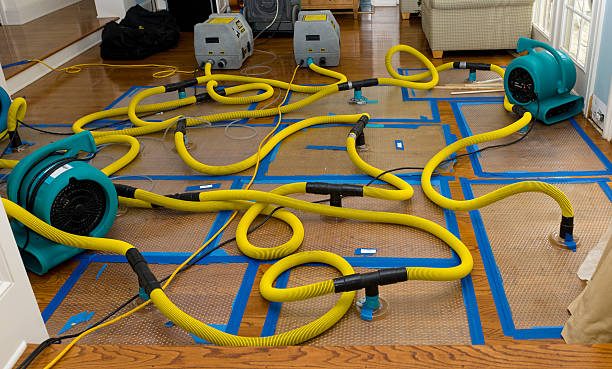
Every technician on our Deer Park roster is background-checked, licensed, and insured, and every truck is stocked with commercial-grade air movers, low-grain-refrigerant dehumidifiers, and antimicrobial treatment for contaminated water intrusion.
Beyond the technical certifications, our crews are trained to communicate clearly under pressure, because a homeowner dealing with a flooded home deserves plain answers, not jargon.

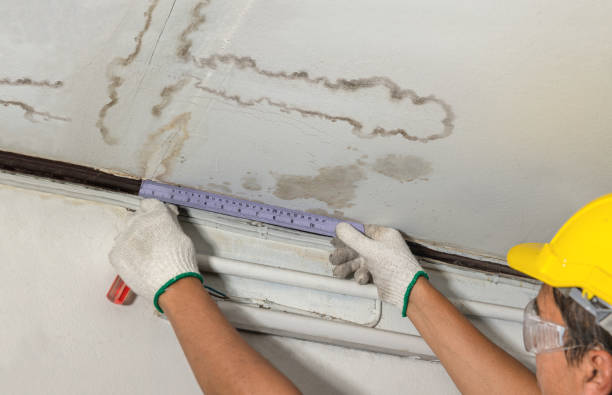
Ceiling stains near a bathroom or kitchen almost always trace back to a plumbing failure rather than a roof leak, which means the source is often closer and easier to fix than homeowners assume.
Musty odors that seem to follow you from room to room often mean the HVAC system is circulating spores from a hidden wet area, which spreads the problem rather than solving it.
Tile that suddenly sounds hollow when you tap it often means the mortar bed underneath has been sitting in moisture long enough to lose adhesion. That hollow sound rarely resolves on its own.
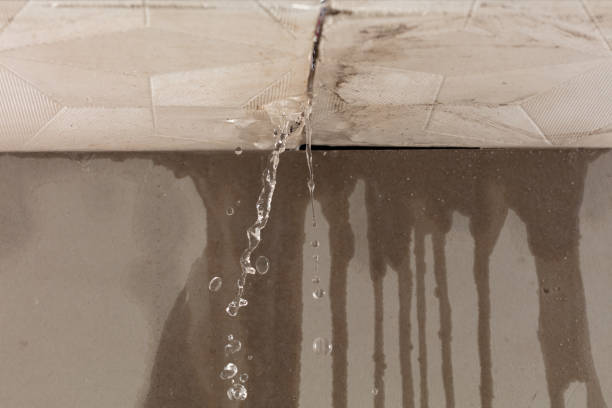
An unexplained jump in your water bill is frequently the first sign of a slab leak or a failing supply line long before any visible water appears. Catching it at this stage is far cheaper than waiting for a visible flood.
Bubbling near a window or exterior wall frequently points to a flashing or seal failure letting water into the wall cavity a little at a time.
Any visible mold, even a small patch in a corner or along a baseboard, means conditions behind that surface have supported growth for a while and the moisture source needs to be found, not just the mold wiped away.
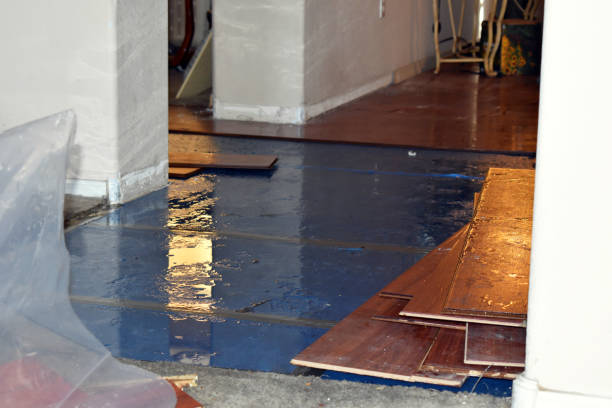
We treat Flood Damage Cleanup as one continuous job rather than a series of handoffs — the crew that extracts the water is accountable for the drying results, and the drying results determine what reconstruction is actually needed.
We prioritize extraction speed above everything else in the first hour, because every additional hour standing water sits raises the odds of secondary damage to subfloors and framing.
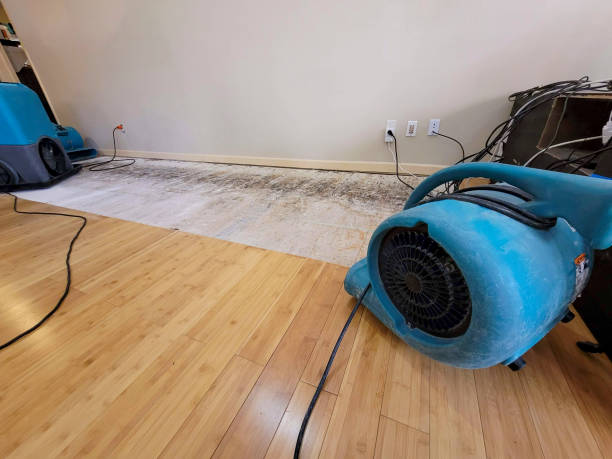
Equipment placement isn't guesswork; it's calculated from psychrometric readings taken at the start of the job and adjusted daily as conditions change.
Category 3 blackwater intrusions require full PPE, controlled demolition of porous materials that can't be sanitized, and hospital-grade antimicrobial treatment before reconstruction begins.
Once structural drying is underway, we apply antimicrobial treatments to studs, subfloor, and other porous surfaces to stop mold colonies before they establish, especially in areas that stayed wet more than 48 hours.
Once the structure tests dry, our reconstruction team handles drywall, insulation, flooring, and trim so you're not managing a second contractor after the restoration crew leaves.
Specialized cleaning techniques can often save upholstery, electronics, and documents that look like a total loss at first glance, which keeps out-of-pocket replacement costs down.


Dispatch asks enough to prep the right equipment before the truck even leaves, so the crew isn't guessing what they'll find on arrival.
The assessment sets the entire plan — skipping it or rushing it is how jobs end up with hidden moisture pockets months later.
We set drying equipment based on the specific moisture readings taken during assessment, not a generic placement pattern.
Once moisture readings confirm the structure is dry, we hand you documentation and move into any needed reconstruction.
We operate under proper licensing and insurance in every market we serve, with documentation available on request.
Local staging means shorter drive times, which matters most in the first hour after a water loss.
We'd rather explain the cost clearly upfront than have that conversation after the job is already underway.
If a drying target isn't met on the first pass, we extend equipment placement at no extra charge until moisture readings confirm the structure is dry.
Every job closes with documented moisture verification, because a guarantee that isn't backed by data isn't much of a guarantee.
That same standard applies whether it's a single flooded bathroom or a full commercial loss — the sign-off criteria don't change based on job size.
Call +1-844-578-1604Whether your address falls in 11729 or one of the neighboring zip codes we cover, the same crew and the same response standard applies.
We track call volume by zip code across Deer Park to keep crew staffing matched to where emergencies actually happen most often.

"A pipe burst behind our water heater and the crew here in Deer Park had extraction units running within 40 minutes of my call. They walked me through the moisture readings every day until it was fully dry."
James R., Deer Park"Our basement took on water during a storm and the crew classified it, extracted it, and had dehumidifiers running the same afternoon. The final invoice matched the upfront quote exactly."
Denise M., Deer Park"Professional from the first phone call to the final walkthrough. They re-tested moisture levels before closing the job instead of just eyeballing it."
Marcus T., Deer Park"The reconstruction crew matched our original flooring almost perfectly after the water damage repair — you'd never know there was a leak."
Priya S., Deer Park"We had a slow leak we didn't notice for weeks and the crew found moisture in places we never would have checked using thermal imaging."
Carlos V., Deer Park"Our commercial unit flooded overnight and they had industrial equipment running before our staff arrived for the morning shift."
Angela F., Deer Park"The tech explained exactly which boards needed to come out and which ones tested dry enough to keep, so we didn't pay to replace more than necessary."
Tyrone B., Deer Park"Storm runoff got into our crawl space and the smell alone told us something was wrong. The crew found the vapor barrier had failed and fixed the actual cause, not just the symptom."
Wendy K., Deer Park